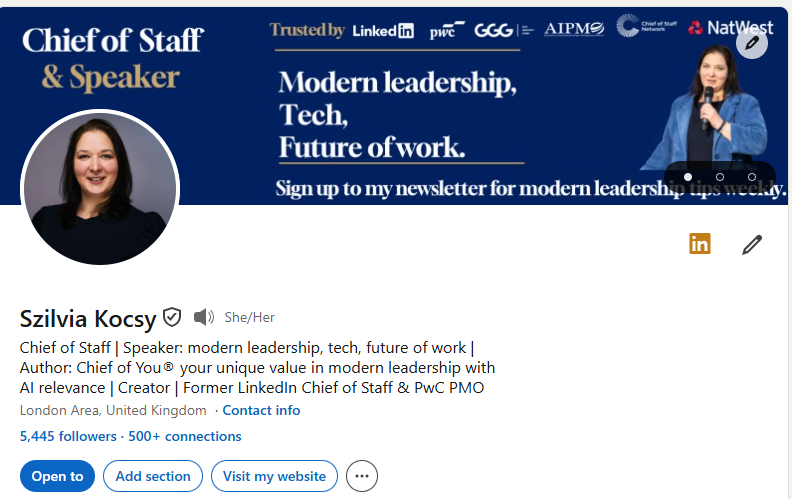
State what you do and what you're known for (more than just a job title)
Add social proof if you have it, like logos of who you've worked with or spoken for
Add one call to action, if you have something live, like an event, or a newsletter
Banners aren't clickable, so skip URLs entirely. Make sure it’s legible from mobile too.
Headline Only the first 140–150 characters show before "see more" cuts you off. Everything is prime content there. Front-load the role, make it interesting so when you comment, others decide to follow you. Save "former" or "ex-" credentials for the end.
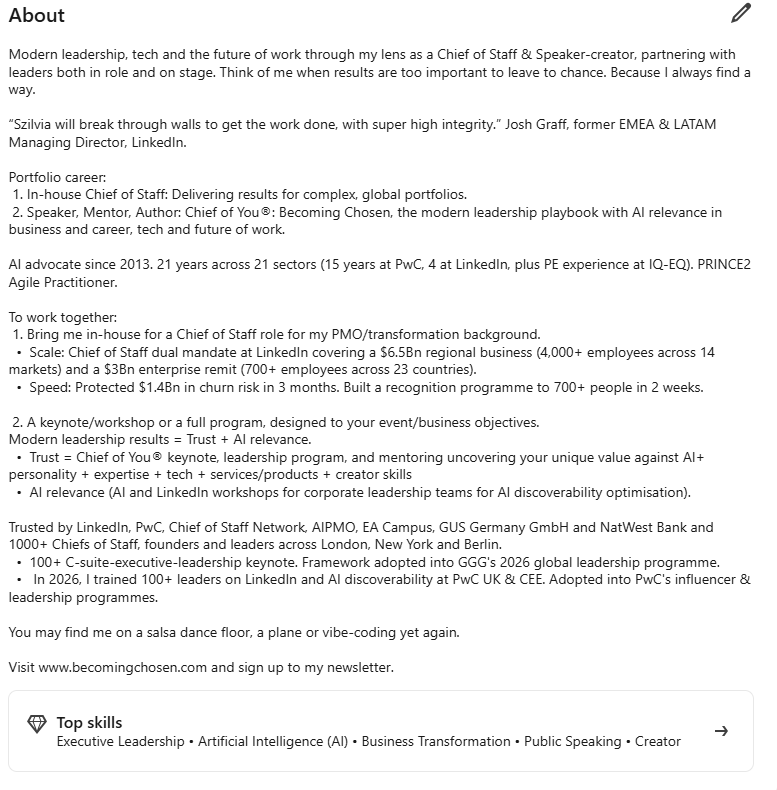
About section - 5th is the least known!
The first 150 characters are the hook, same rule as the headline. Open with who you serve and what result you deliver.
Positioning line + signature sentence one sentence people could refer you for, recognise themselves in or understand about your world.
Credibility based on data. Years, sectors, certifications.
One human line, what you enjoy outside work. This is what makes someone remember you specifically, not just respect the CV.
If you have a portfolio website, add in, and a call to action where relevant, it can be as much as: “Let’s connect”.
Top skills. Fill them in, they drive who your content will be shown to.
Best practice:
The way the algorithm decides who to show your content to is whether you’re qualified to talk about what you do so your expertise, who your audience should be and what you say. It’s worth staying consistent on three- four topics, so the algorithm to keep showing the right content to the right audience.
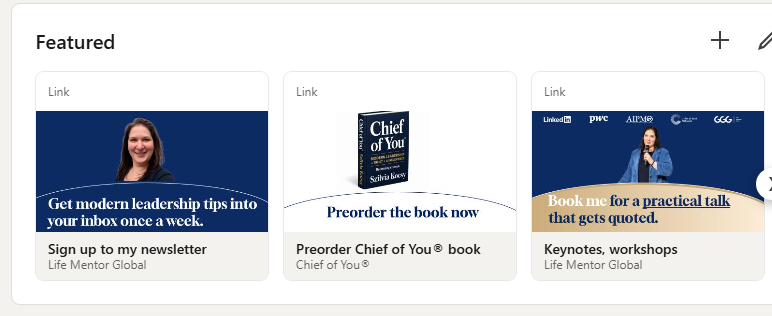
Featured
It’s like priorities. When there are too many, nothing is really prioritised. Keep it max 3-4. It’s worth adding an image, otherwise you’re making the person visiting your profile do the work you should for them.
Title = imperative call to action. Each one tells the visitor exactly what happens if they click.
Order by ascending commitment. A visitor scanning left to right meets the easiest yes first.
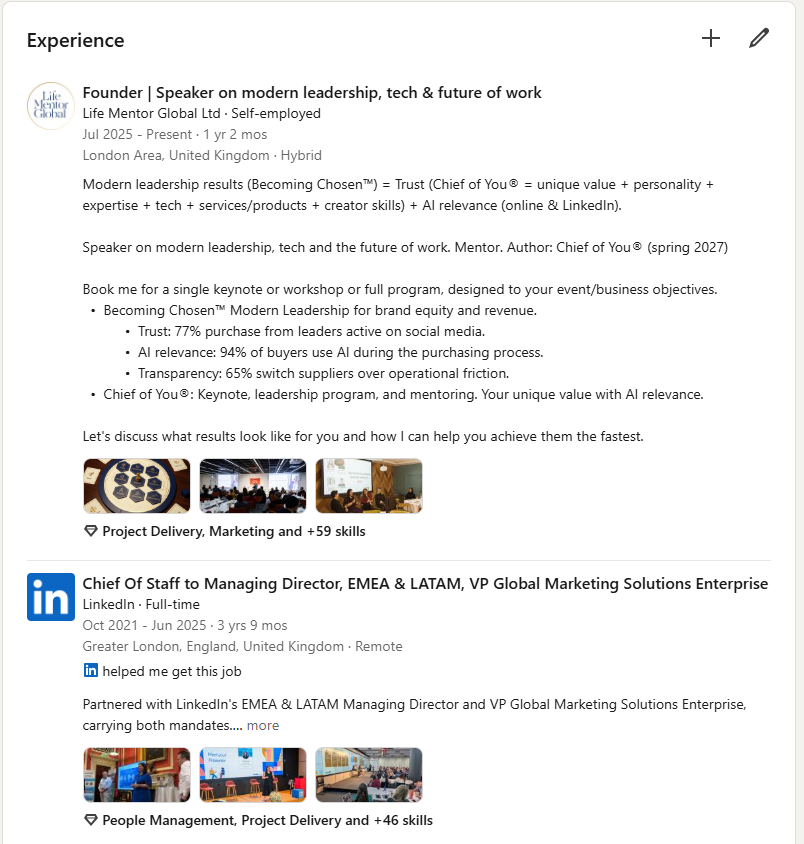
Experience section This is where you prove the claims your headline and About section made.
Title line Not a job title alone. Think of it as a positioning statement that tells a reader what you do across the whole role, not just the label.
Company, dates, location Standard fields, but note the detail: "Hybrid" / "Remote" is included every time.
The description: five distinct moves
Open with the data. Numbers showing the level of complexity you’ve handled
Describe what action you took, what the impact was and what changed as a result of your actions.
Media row Show your work. This is visual proof of the claims in the text actually happened.
Skills tag You can add up to 100 skills, and you can tag each skill with each role. Recruiters love this.
The rule connecting all of this: each role should carry its own micro version of your positioning. Every job becomes another place someone can be sold on working with you, not just informed that you once did.